
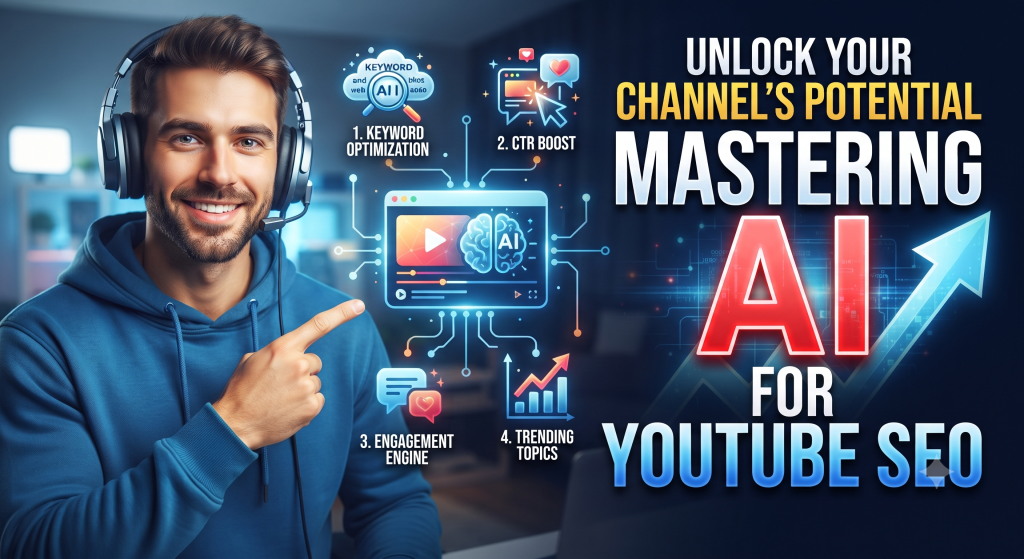
Many YouTube creators find themselves in a constant battle for visibility, often feeling overwhelmed by the ever-changing landscape of search engine optimization. You’ve heard the buzz about artificial intelligence, but figuring out how to actually apply AI for YouTube SEO can feel like deciphering a complex code. The good news is, integrating AI into your strategy isn’t just for tech gurus; it’s a powerful way to streamline your workflow, uncover hidden opportunities, and ultimately get your videos seen by more people. This isn’t about replacing your creative spark, but rather enhancing it with smart, data-driven insights.
What is AI for YouTube SEO and Why Does it Matter?
At its core, AI for YouTube SEO involves using artificial intelligence technologies to optimize your video content and channel for better search ranking and discoverability on the platform. Think of AI as your super-powered assistant, capable of processing vast amounts of data far quicker than any human. It can analyze trending topics, predict audience interests, and even suggest improvements to your video elements before you even hit publish. This matters immensely because YouTube’s algorithm is incredibly sophisticated. By leveraging AI, creators can essentially speak the algorithm’s language more fluently, ensuring their content is recognized as relevant and valuable to viewers.
Streamlining Keyword Research
One of the most time-consuming aspects of YouTube SEO is keyword research. Manually sifting through Google Trends, competitor videos, and various tools can be a grind. AI changes this entirely. Advanced AI tools can analyze search queries, identify long-tail keywords with lower competition but high intent, and even predict emerging trends before they peak. They can also scrutinize competitor channels to reveal their most effective keywords, giving you a strategic advantage. This means you spend less time guessing and more time creating content that viewers are actively searching for.
Crafting Compelling Titles and Descriptions
Your video title and description are critical for both human viewers and YouTube’s algorithm. A well-crafted title hooks attention, while a descriptive text provides context and crucial keywords. AI can help here by suggesting optimized titles that balance clickability with search relevance. Furthermore, AI can assist in generating rich, keyword-dense descriptions that naturally incorporate your target phrases without sounding robotic. It can even analyze the sentiment and readability of your text, ensuring it resonates with your audience and encourages engagement.
Generating Engaging Video Scripts
Beyond just text, AI is increasingly capable of aiding in script creation. Some tools can take a topic or a set of keywords and generate a basic script outline, or even full drafts. This can be particularly useful for overcoming writer’s block or for quickly structuring educational or explanatory videos. While a human touch is always essential for personality and nuance, AI can provide a solid foundation, ensuring your script flows well, addresses key points, and maintains an optimal length for viewer retention.
Analyzing Performance and Trends
After your video goes live, the work isn’t over. Understanding its performance is key to continuous improvement. AI-powered analytics can go beyond basic watch time and views. These tools can identify patterns in viewer behavior, pinpoint exactly where audiences drop off, and even suggest content topics based on what’s currently performing well within your niche. By spotting trends and understanding what resonates with your audience, you can refine your content strategy for future uploads, making each video more impactful than the last.
Practical AI Tools for YouTube Creators
The market is now brimming with AI tools designed to assist creators. Knowing which ones to integrate into your workflow can seem daunting, but many offer specific benefits that address common YouTube challenges. From optimizing your video’s discoverability to enhancing its production quality, these tools are becoming indispensable for competitive channels. Let’s explore some categories of AI assistance that can truly make a difference.
AI-Powered Scriptwriters and Idea Generators
Tools like ChatGPT, Jasper, or Copy.ai are general AI writing assistants that can be adapted for YouTube. You can feed them prompts about your niche or specific video ideas, and they can generate outlines, script drafts, or even brainstorming lists for future content. Some specialized YouTube AI tools also exist, focusing on generating video ideas based on trending topics or analyzing your existing content for gaps. They act as excellent starting points, saving you significant time in the initial conceptualization phase.
SEO Tools with AI Integrations
Many established SEO platforms are now integrating AI capabilities. Tools like TubeBuddy or vidIQ offer AI-driven keyword suggestions, title optimization scores, and competitive analysis features specifically tailored for YouTube. These integrations help you understand the search landscape, identify optimal tags, and even predict the likely performance of certain keywords. Using these tools provides data-backed confidence in your SEO choices, moving you beyond guesswork.
AI for Thumbnail and Visual Optimization
While often overlooked in SEO discussions, a compelling thumbnail is crucial for click-through rates. AI can assist here by analyzing successful thumbnails in your niche, suggesting color palettes, font styles, and even facial expressions that tend to perform well. Some AI-powered image editors can quickly remove backgrounds, enhance image quality, or generate variations for A/B testing, ensuring your visual first impression is as strong as your SEO.
Best Practices for Integrating AI into Your Workflow
Simply using AI tools isn’t enough; integrating them effectively requires a thoughtful approach. First and foremost, remember that AI is a co-pilot, not an autopilot. Always review and refine AI-generated content to ensure it aligns with your brand voice, accuracy, and creative vision. Blindly trusting AI can lead to generic or even incorrect information. Secondly, start small. Experiment with one or two tools for specific tasks, like keyword research or title generation, before trying to overhaul your entire process. This allows you to learn and adapt gradually. Thirdly, use AI to free up your time for what humans do best: creativity, storytelling, and building genuine connections with your audience. Finally, stay updated. The AI landscape is evolving rapidly, so regularly explore new tools and features that could benefit your channel.
Conclusion
Embracing AI for YouTube SEO is no longer a futuristic concept; it’s a present-day advantage for creators serious about growth. From demystifying keyword research to crafting highly engaging content and understanding audience behavior, AI offers an unparalleled suite of tools to elevate your channel. By thoughtfully integrating these intelligent assistants into your workflow, you can optimize your time, broaden your reach, and ultimately unlock the full potential of your YouTube presence. The future of YouTube is smart, and with AI by your side, your channel can be too.