
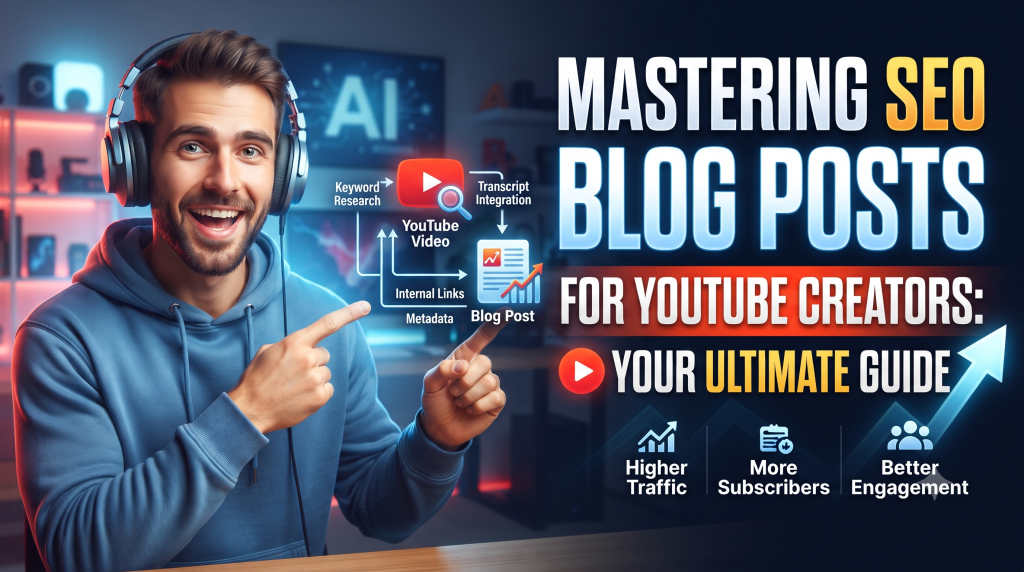
As a YouTube creator, you pour countless hours into producing engaging videos, honing your editing skills, and building a community. But what if there was a powerful, often overlooked strategy to amplify your reach even further, beyond the YouTube algorithm? The answer lies in creating strategic SEO blog posts for YouTube creators. This ultimate guide will walk you through transforming your video content into discoverable, traffic-driving blog articles.
While YouTube is a fantastic platform for visual content, relying solely on it can limit your audience reach. Think about it: many people still turn to Google for answers, often preferring to read an article or skim for information before watching a video. By integrating a blog into your content strategy, you tap into a massive pool of potential viewers who might not discover your channel otherwise.
Why YouTube Creators Need to Blog
Blogging offers a unique synergy with your video efforts, creating a robust content ecosystem. Firstly, it expands your discoverability. Every blog post is another indexed page on Google, giving you more opportunities to appear in search results. This means new viewers can find you through text searches, then transition to watching your related videos.
Furthermore, blog posts allow you to dive deeper into topics that might be too complex or lengthy for a typical video. You can provide detailed tutorials, comprehensive analyses, or supplementary resources that complement your visual content. This positions you as an authoritative voice in your niche, building trust and credibility with your audience.
Another significant benefit is content longevity. While video trends can come and go, well-optimized blog posts can continue to rank and drive traffic for months, even years. This evergreen content acts as a consistent lead generator for your YouTube channel, providing a steady stream of passive traffic. Ultimately, blogging diversifies your traffic sources, making your online presence more resilient and less dependent on a single platform’s algorithm.
The Ultimate Prompt: Transforming Video Ideas into Blog Posts
The concept of an “ultimate SEO blog writing prompt” isn’t a magic phrase you type into an AI; it’s a strategic approach to content creation. For YouTube creators, this means viewing your video topics as prompts for blog posts. Every video you create is a goldmine of information, keywords, and potential blog content.
Start by identifying the core theme or problem your video addresses. What questions does it answer? What specific terms do you use? Think about the pain points your audience experiences and how your video provides a solution. This forms the foundation for your blog post, ensuring it’s directly relevant to your existing content and audience.
Consider a video titled “5 Best Budget Cameras for Vlogging.” Your blog post could expand on each camera, include more technical specs, comparison charts, and user reviews that might bog down a video. The goal is to offer additional value and a different consumption experience, not just a transcription of your video.
Crafting Effective SEO Blog Posts for YouTube Creators
Now that we understand the ‘why,’ let’s dive into the ‘how.’ Creating blog posts that rank well and attract your target audience requires a thoughtful approach to search engine optimization. Here’s a detailed breakdown:
Step 1: Keyword Research Tailored for Video Content
Your journey to powerful SEO blog posts for YouTube creators begins with robust keyword research. Don’t just guess what people are searching for. Start by looking at your existing YouTube analytics: what terms are people using to find your videos? Also, consider what questions your viewers frequently ask in comments.
Beyond your own data, utilize tools like Google Keyword Planner, Ahrefs, SEMrush, or even free alternatives like Ubersuggest. Input your video’s main topic and explore related keywords, focusing on long-tail phrases (e.g., “how to edit YouTube videos for beginners on Mac” instead of just “video editing”). These longer phrases often have lower competition and higher intent. Analyze your competitors’ blogs, not just their videos, to see what topics and keywords they’re ranking for.
Step 2: Structuring Your Blog Post for Readability and Search Engines
A well-structured blog post is crucial for both user experience and SEO. Begin with a compelling title that includes your primary keyword and entices clicks. Your introduction should hook the reader immediately, clearly state what the post will cover, and naturally incorporate your focus keyphrase, such as “SEO blog posts for YouTube creators.”
Break up your content with clear headings (H2s, H3s, H4s). These not only improve readability by making the text scannable but also allow you to naturally integrate secondary keywords. Each paragraph should be concise, ideally under 150 words, to maintain reader engagement. Use bullet points or numbered lists when appropriate to present information clearly and efficiently.
Crucially, embed your relevant YouTube videos directly into the blog post. This keeps readers on your site longer and encourages them to watch your content. Also, include internal links to other related blog posts on your site and to your YouTube channel. External links to reputable sources can further enhance your post’s authority. Conclude with a clear call to action, whether it’s encouraging comments, sharing the post, or subscribing to your channel.
Step 3: Writing Engaging, SEO-Friendly Copy
While SEO is vital, always remember you’re writing for humans first. Focus on creating high-quality, valuable content that genuinely helps your audience. Write in a natural, conversational tone, varying your sentence lengths to maintain a good flow. Avoid jargon where possible, or explain it clearly if necessary.
Integrate your chosen keywords naturally throughout the text, but never force them. Keyword stuffing can harm your rankings and alienate readers. Instead, use synonyms and related terms to enrich your content semantically. Transition words and phrases (e.g., “furthermore,” “however,” “in addition,” “consequently”) are excellent for guiding the reader smoothly from one idea to the next, improving overall readability.
Beyond text, incorporate other multimedia elements. Images, infographics, and GIFs can break up text and make your post more visually appealing. Don’t forget to optimize these with descriptive alt text for accessibility and SEO. Finally, craft a concise and compelling meta description (under 156 characters) that includes your focus keyphrase and encourages clicks from the search results page.
Leveraging Your Video Content Beyond the Embed
Embedding your videos is just the start. Consider transcribing your videos and using the text in your blog posts. This provides a wealth of keyword-rich content and makes your video accessible to those who prefer reading. You can also highlight key moments from your videos with timestamps, allowing readers to jump directly to relevant sections.
Don’t just regurgitate your video; expand upon it. Add updated information, answer common questions from your video’s comments section, or provide additional resources not mentioned in the video. This adds significant value and makes your blog post a standalone piece of content, not just a duplicate.
Promoting Your New Blog Post
Once your SEO-optimized blog post is live, don’t let it sit idly. Share it across all your social media channels, tailoring the message for each platform. Link to it from your YouTube video descriptions and end screens. Include it in your email newsletter to your subscribers. The more eyes on your blog post, the more traffic it can drive back to your YouTube channel.
Conclusion
Mastering SEO blog posts for YouTube creators is a powerful strategy to expand your reach, build authority, and diversify your content ecosystem. By thoughtfully transforming your video ideas into optimized blog content, you create new avenues for discovery, turning casual searchers into dedicated viewers and subscribers. Start implementing these strategies today and watch your online presence flourish, truly harnessing the power of both video and text.